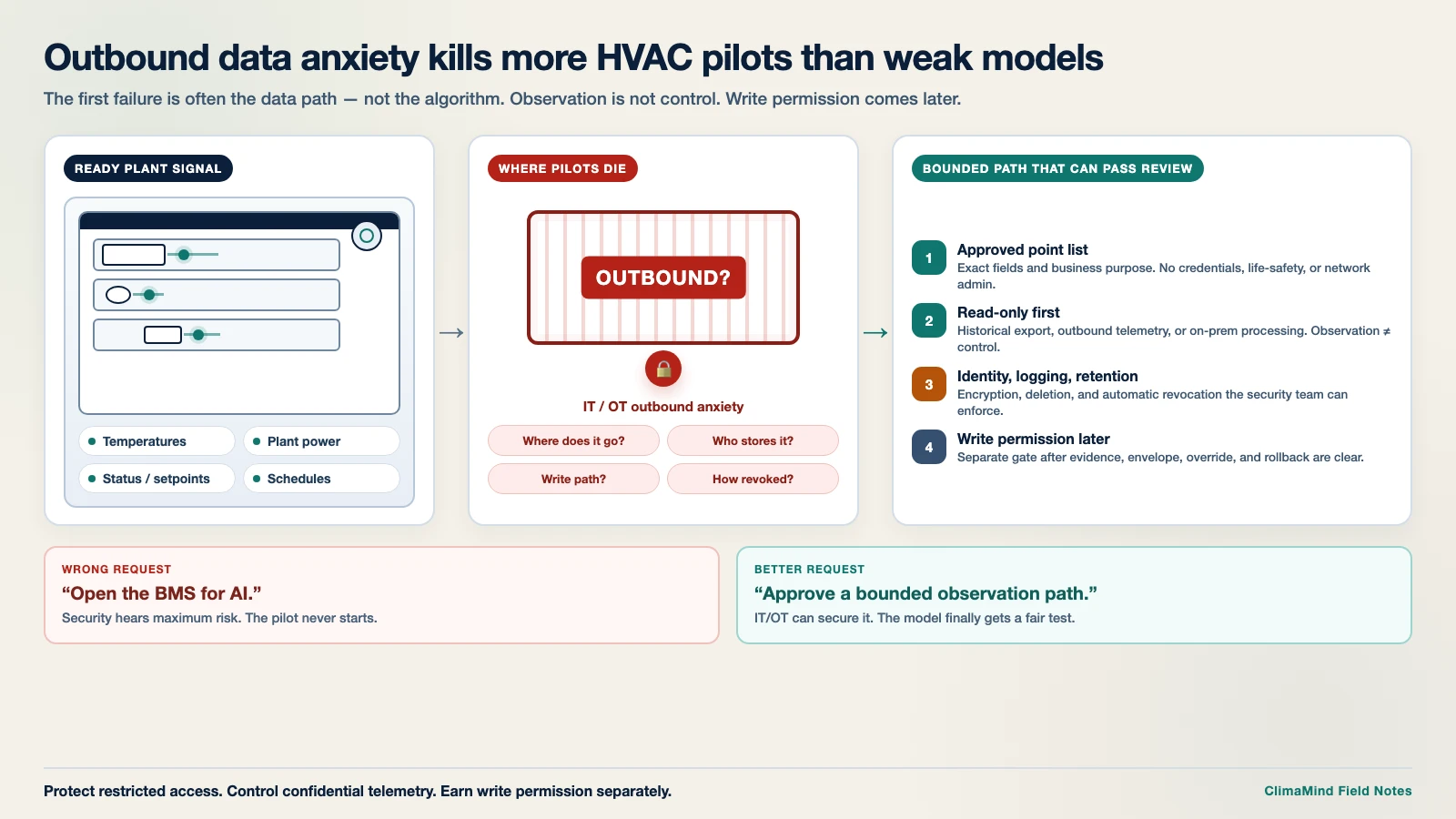
Outbound Data Anxiety Kills More HVAC Pilots Than Weak Models
Aug 7, 20264 min read
HVAC optimization pilots often stall when IT and OT cannot approve a bounded outbound data path, not because the control model is too weak.
Field Notes
HVAC optimization pilots often stall when IT and OT cannot approve a bounded outbound data path, not because the control model is too weak.
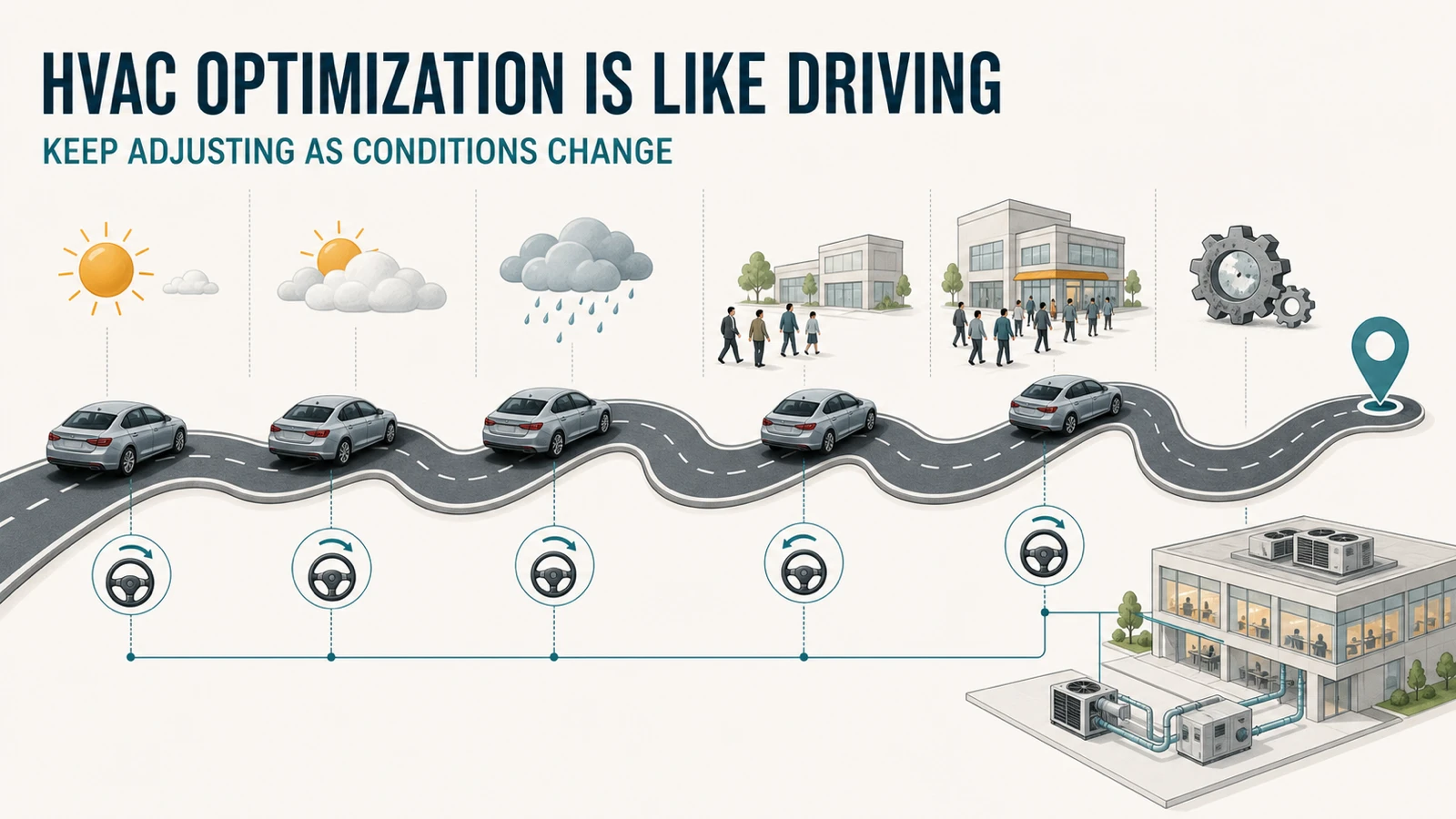
HVAC optimization is an ongoing operating process because weather, occupancy, building use, and equipment conditions keep changing.
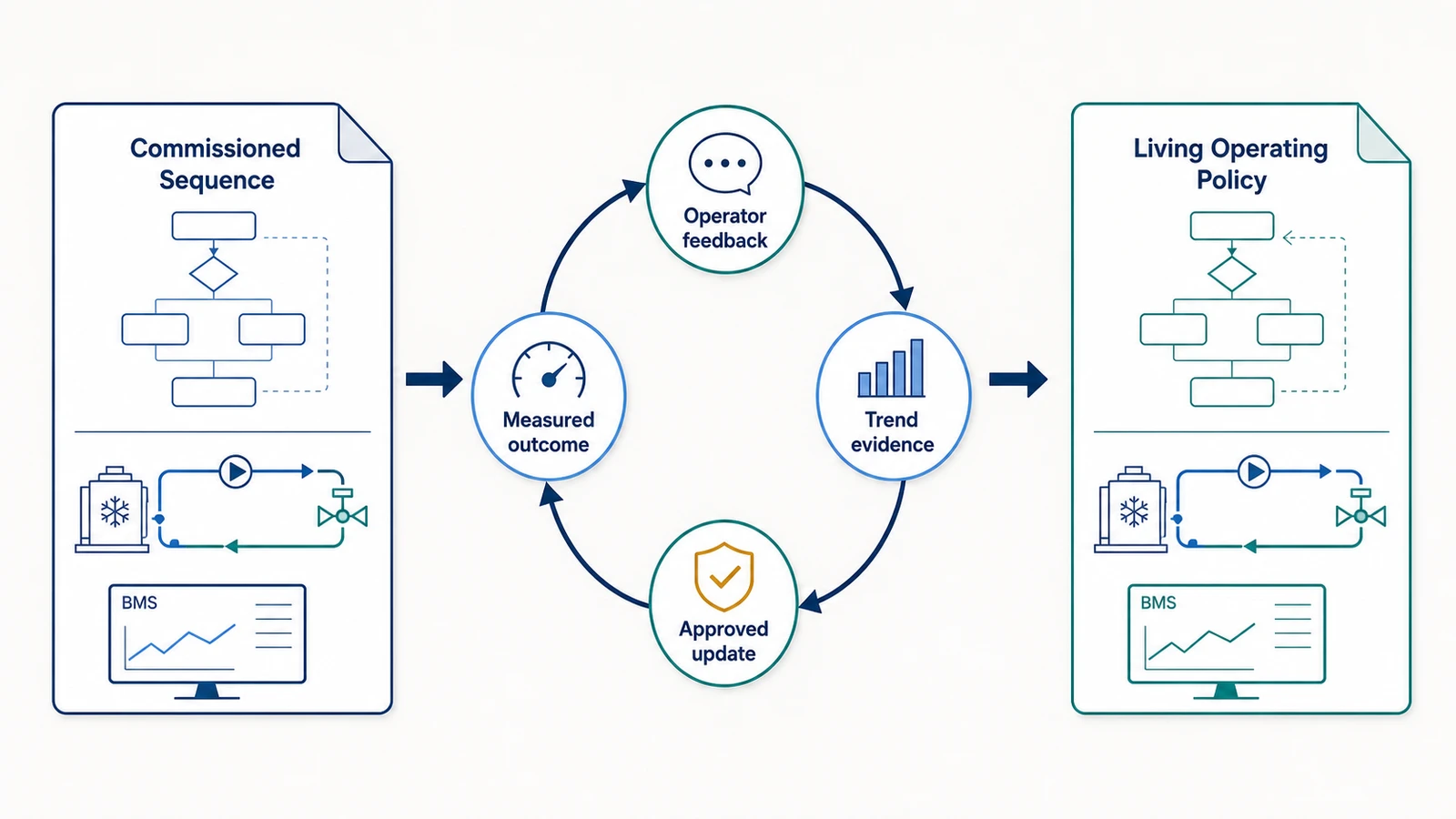
HVAC sequences should evolve through visible operating evidence, ownership, review, and measurement—not be treated as static documents from commissioning.
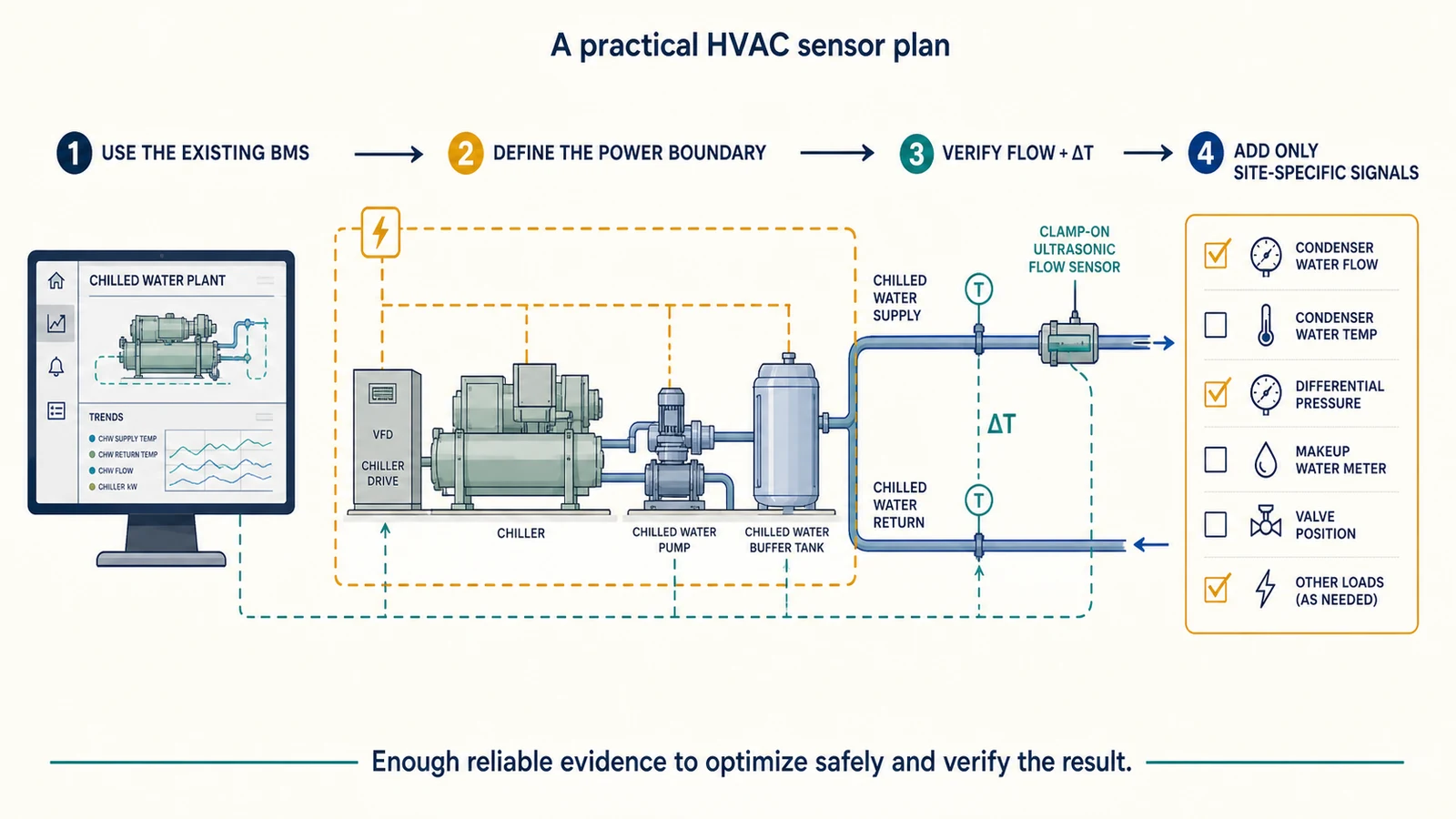
A practical HVAC sensor plan starts with existing BMS data, reliable electrical metering, verified flow, and site-specific measurement requirements.
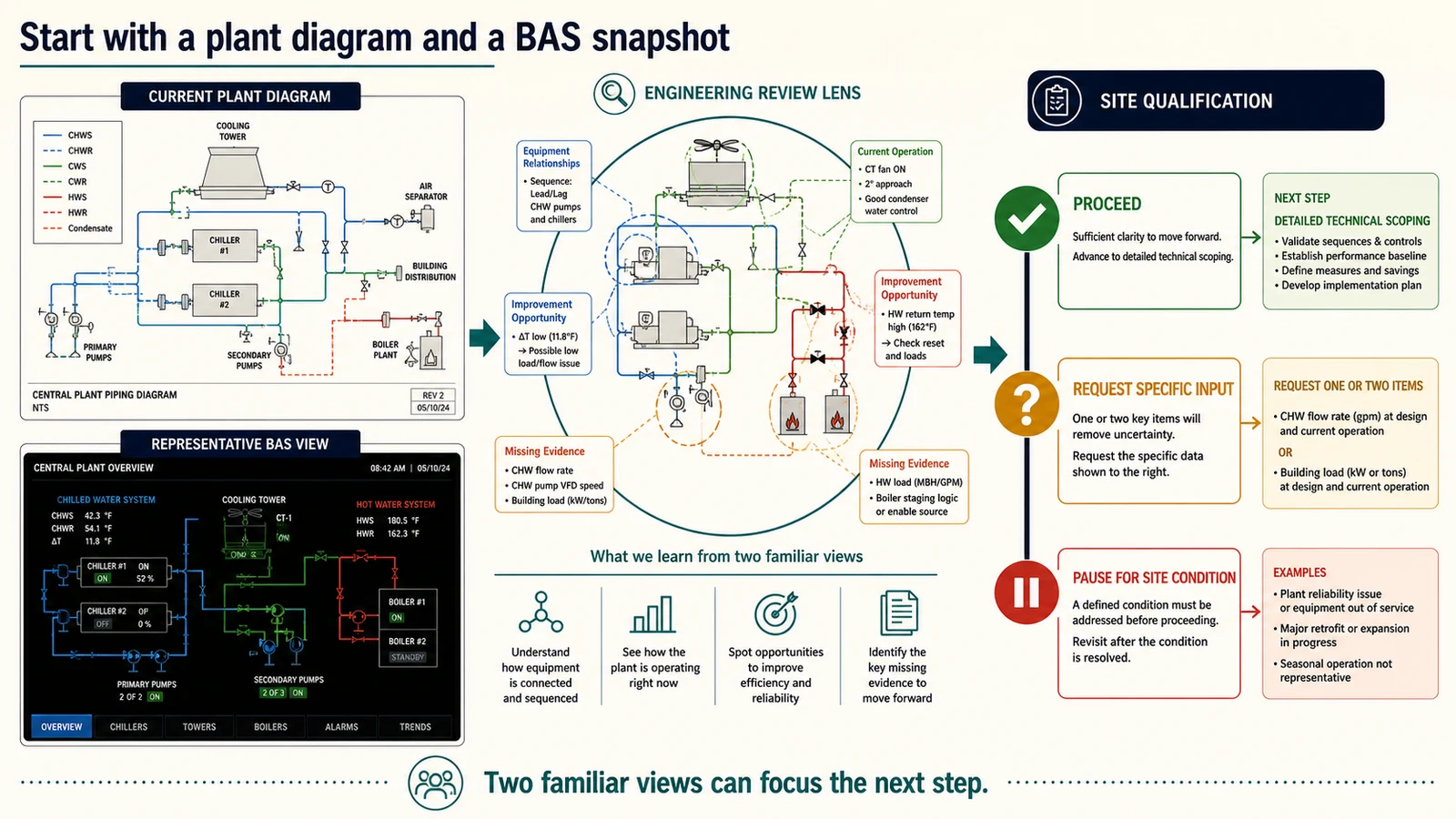
A plant diagram and representative BMS screenshots can support a useful Site Qualification review that identifies opportunities and focuses the next data request.
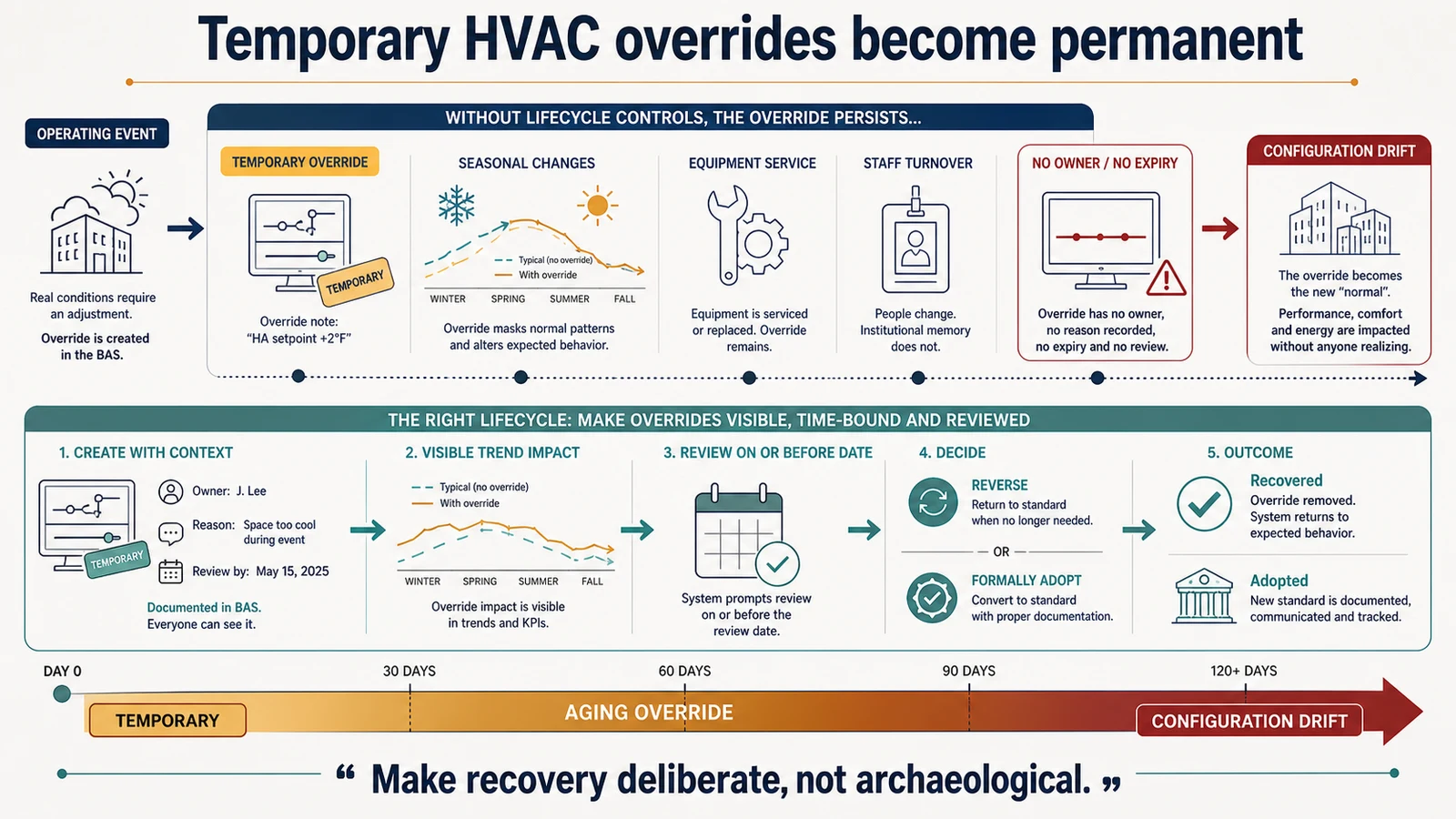
Temporary HVAC overrides can quietly become permanent BMS configuration drift. Preserve operational intent with ownership, expiry, audit trails, and reversible supervisory control.
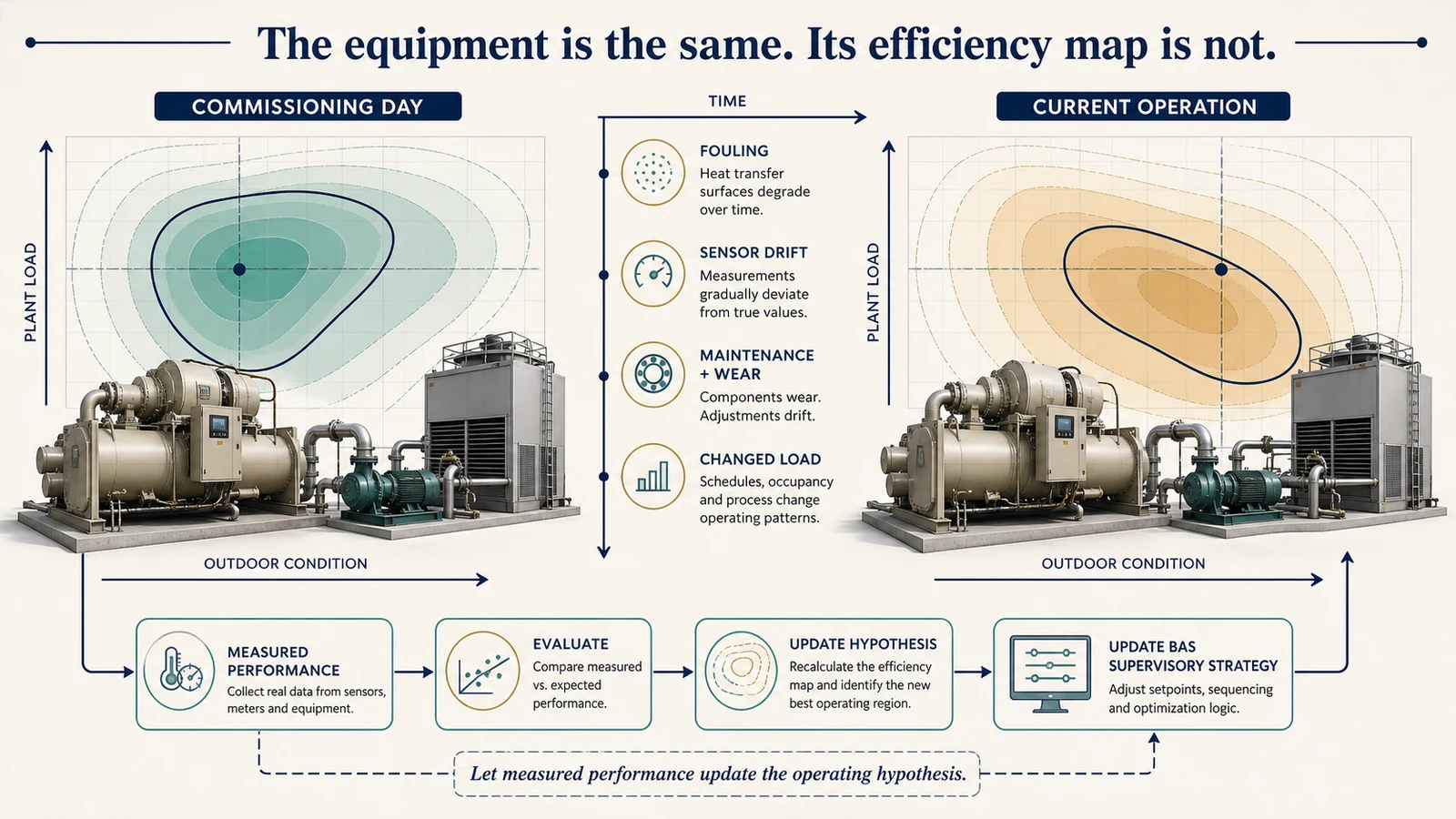
Central plant equipment efficiency maps change with operation, maintenance, and load. Supervisory control can respond using measured performance while the existing BMS keeps authority.
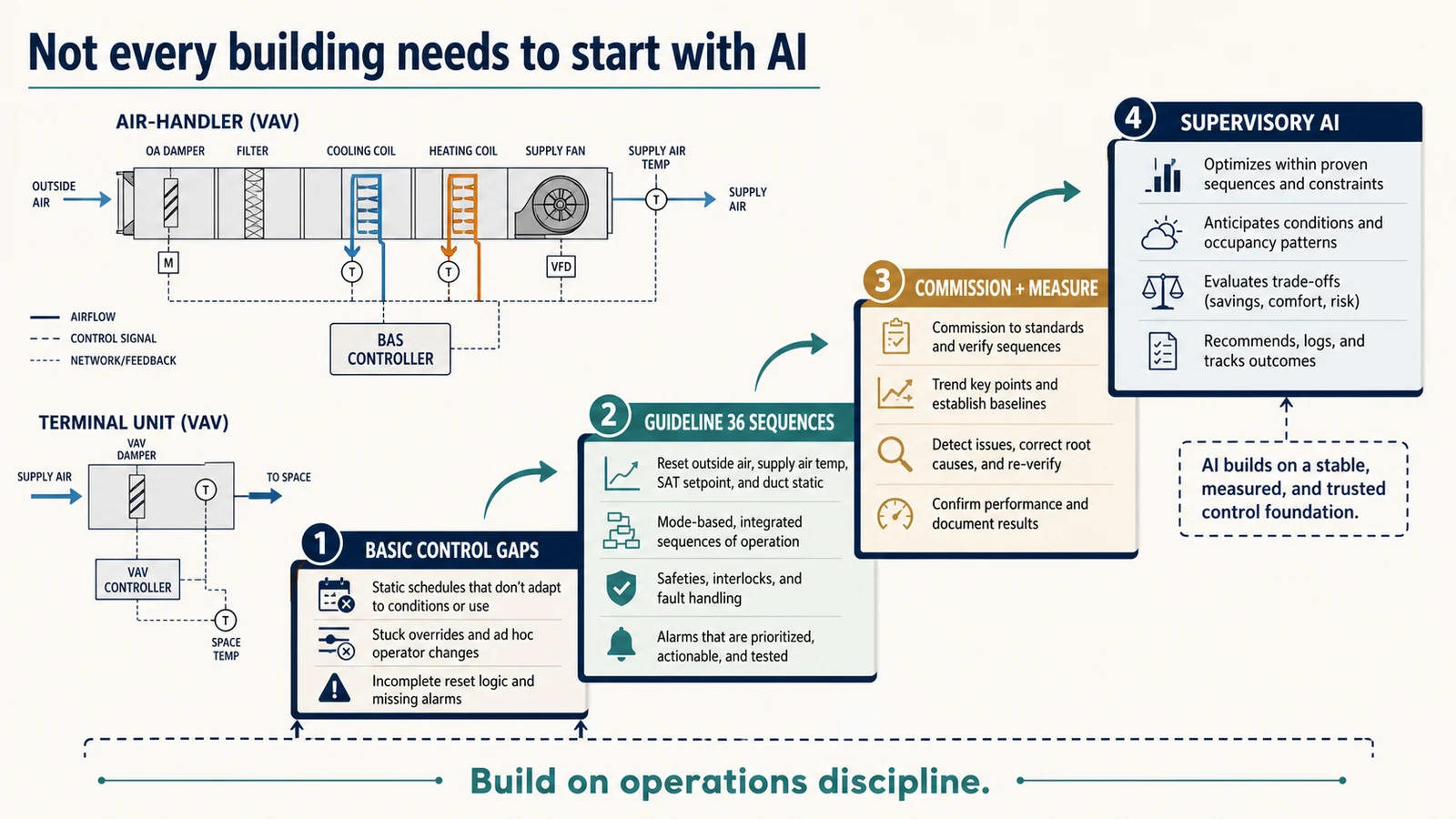
Not every building needs to start with AI. ASHRAE Guideline 36 can be a practical first step toward better HVAC control sequences.
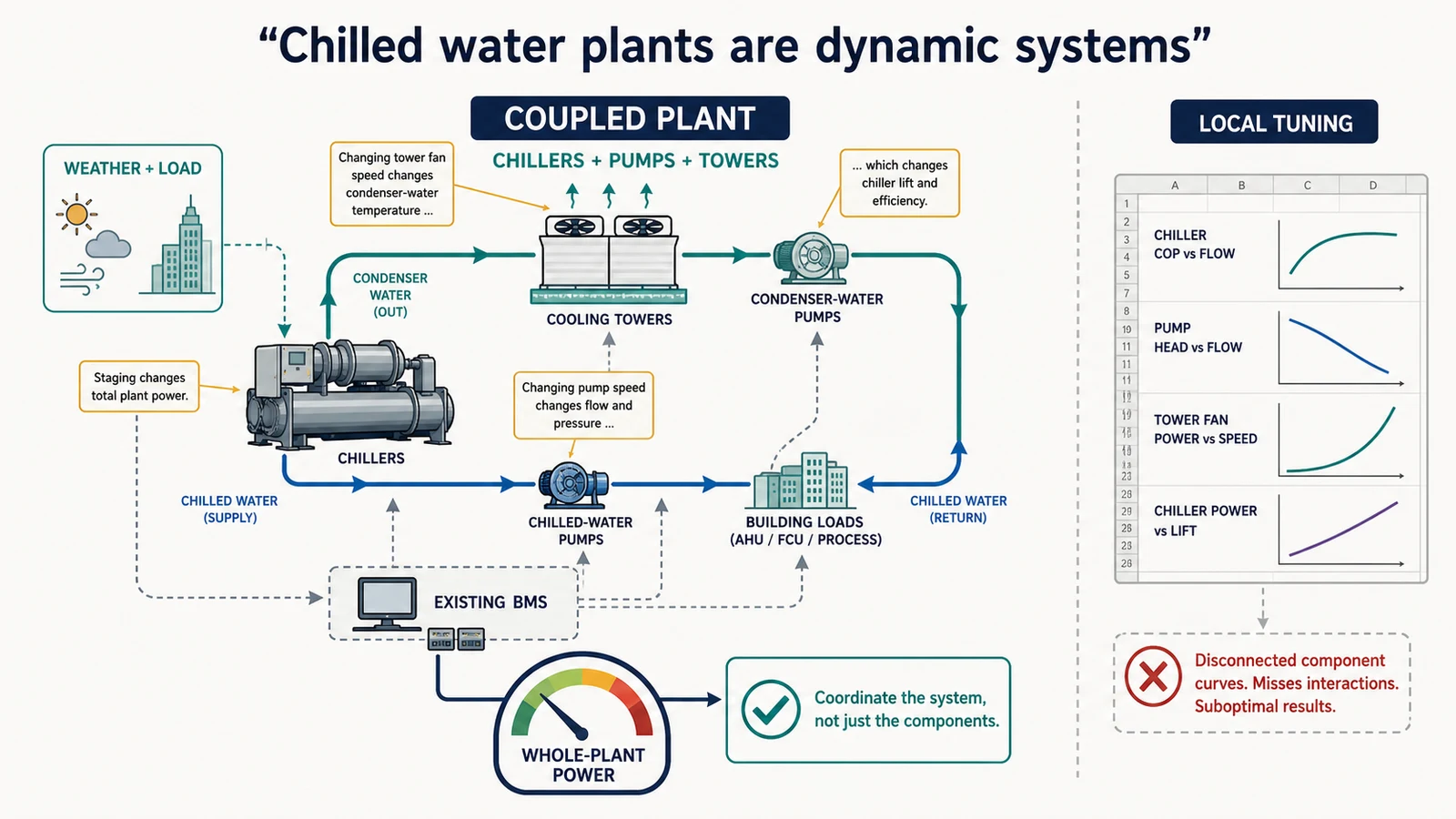
Chilled water plants are dynamic systems that need supervisory control, not isolated spreadsheet tuning.
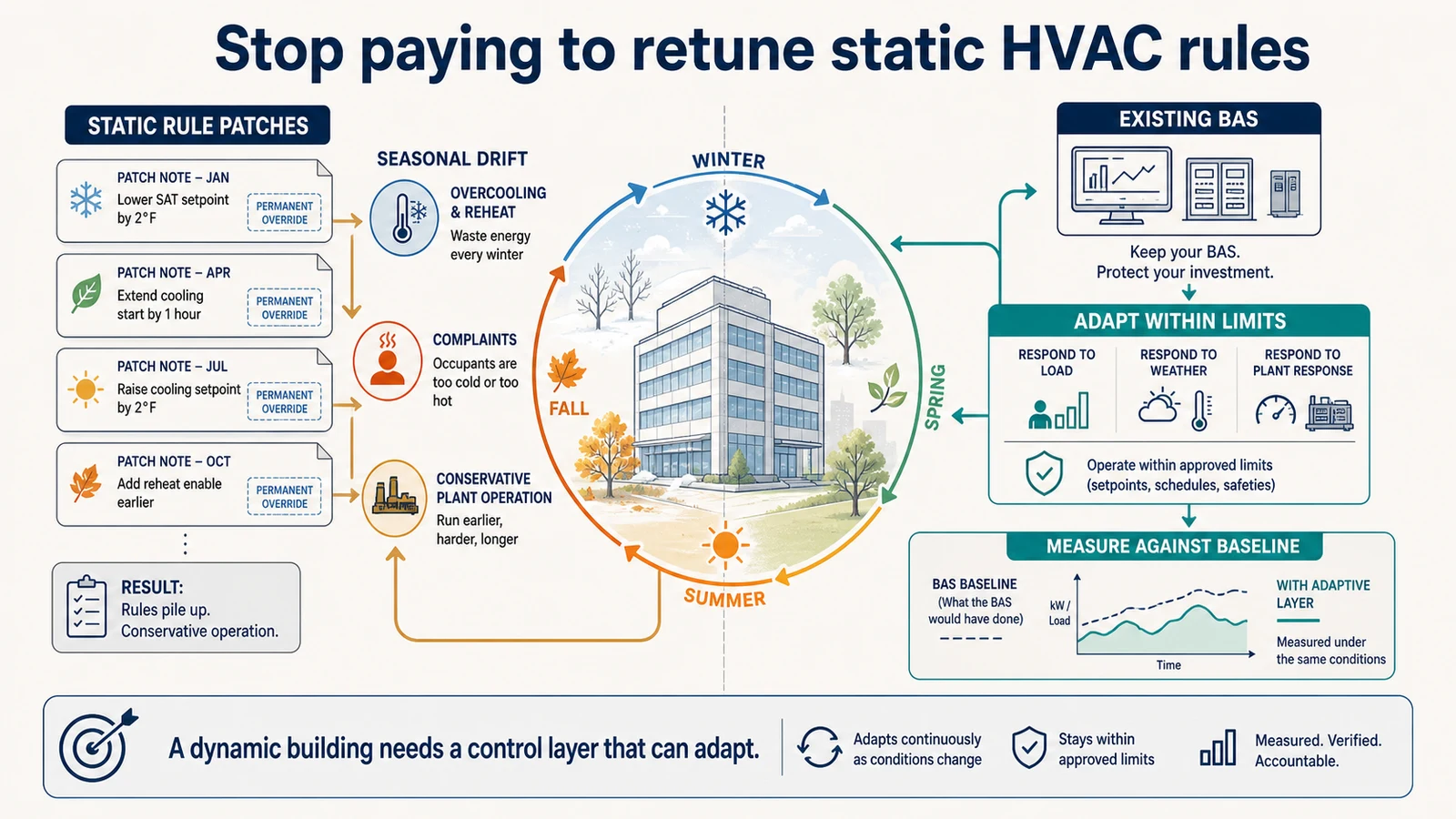
If a building keeps fighting its static BMS rules, AI supervisory control can be a better path than another round of manual retuning.
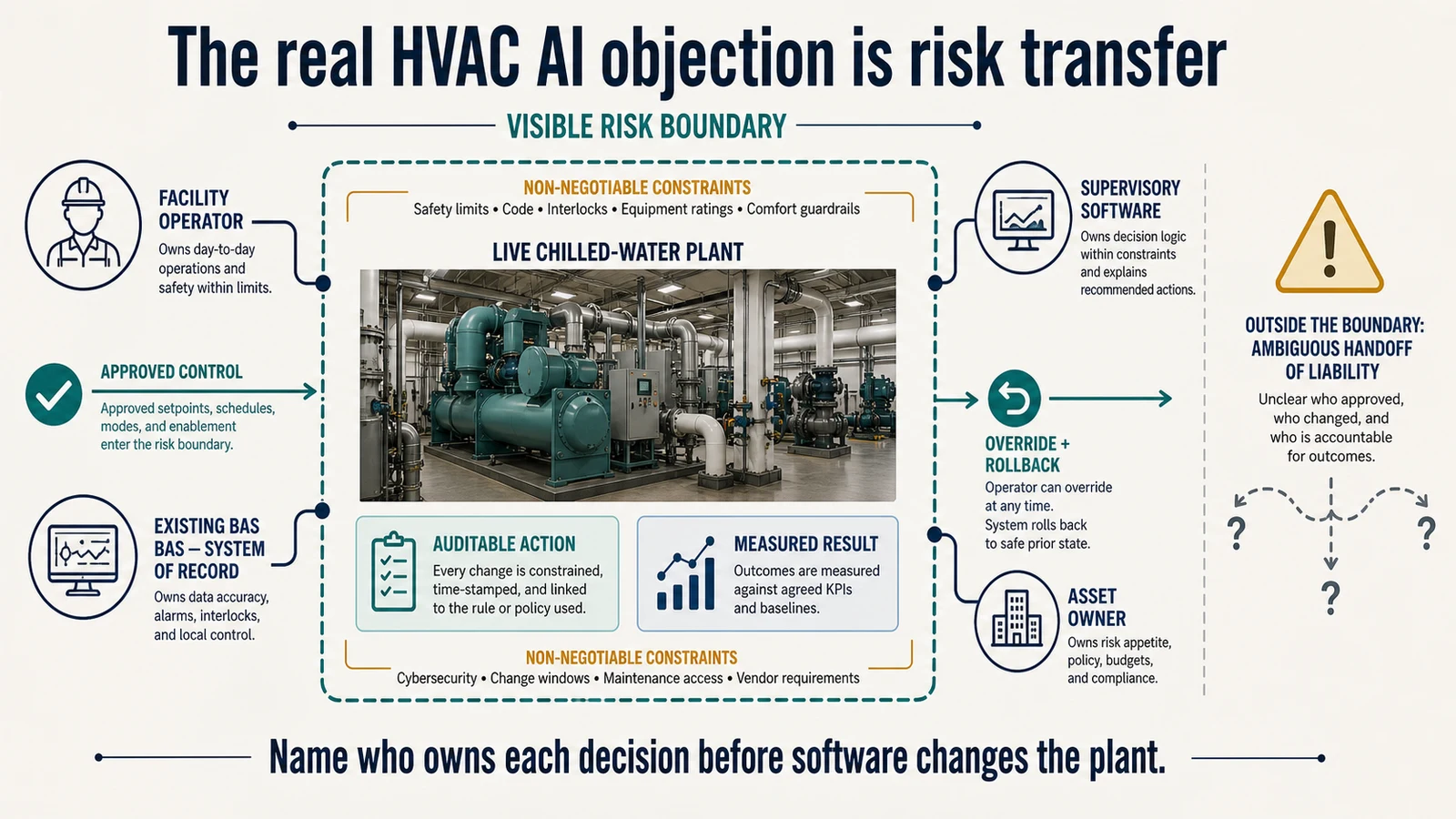
The real HVAC AI sales objection is whether operational risk is bounded, visible, and accountable before software changes the plant.
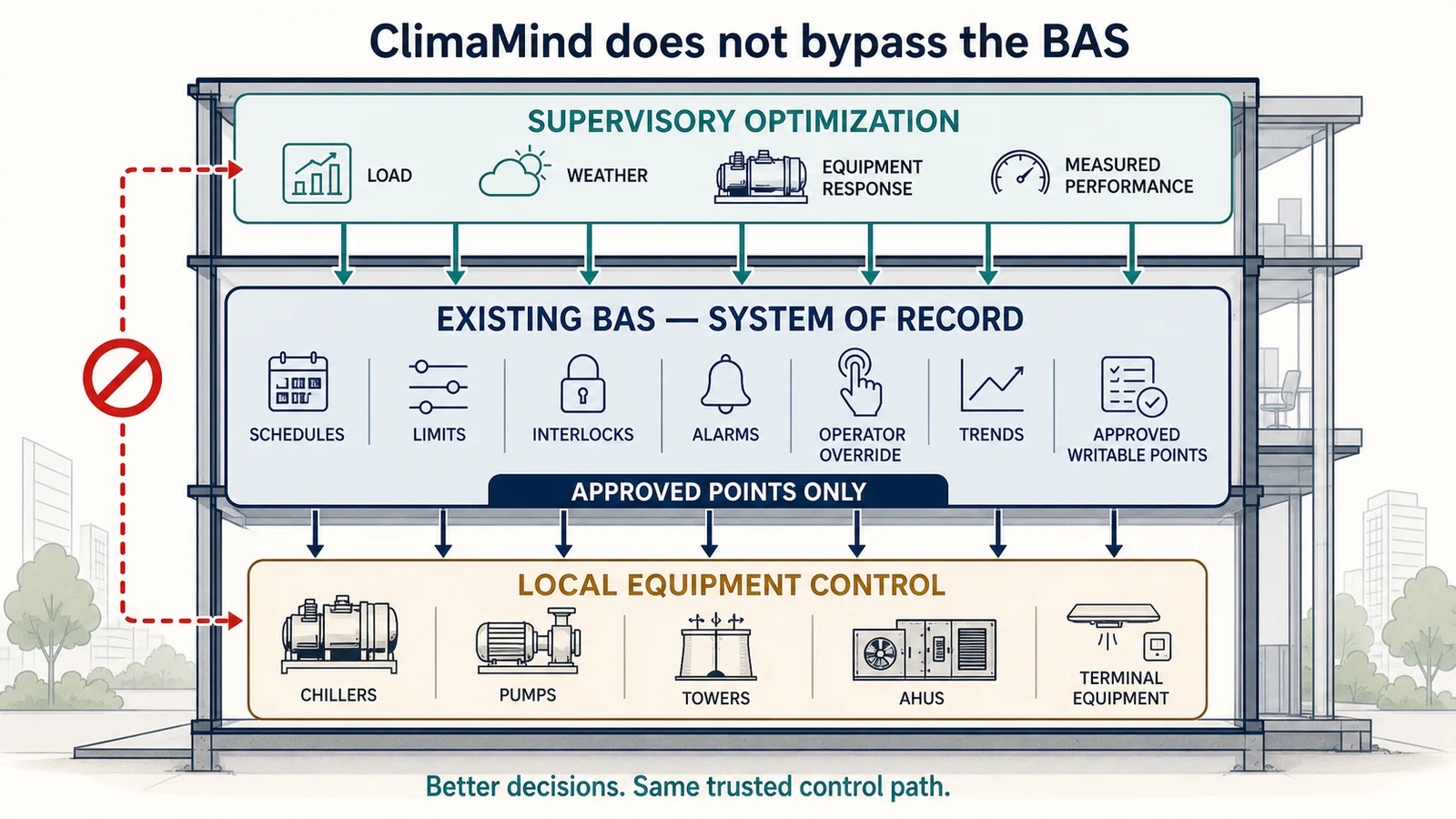
ClimaMind keeps HVAC optimization inside the existing BAS control path, so better setpoint decisions do not bypass the system operators already trust.
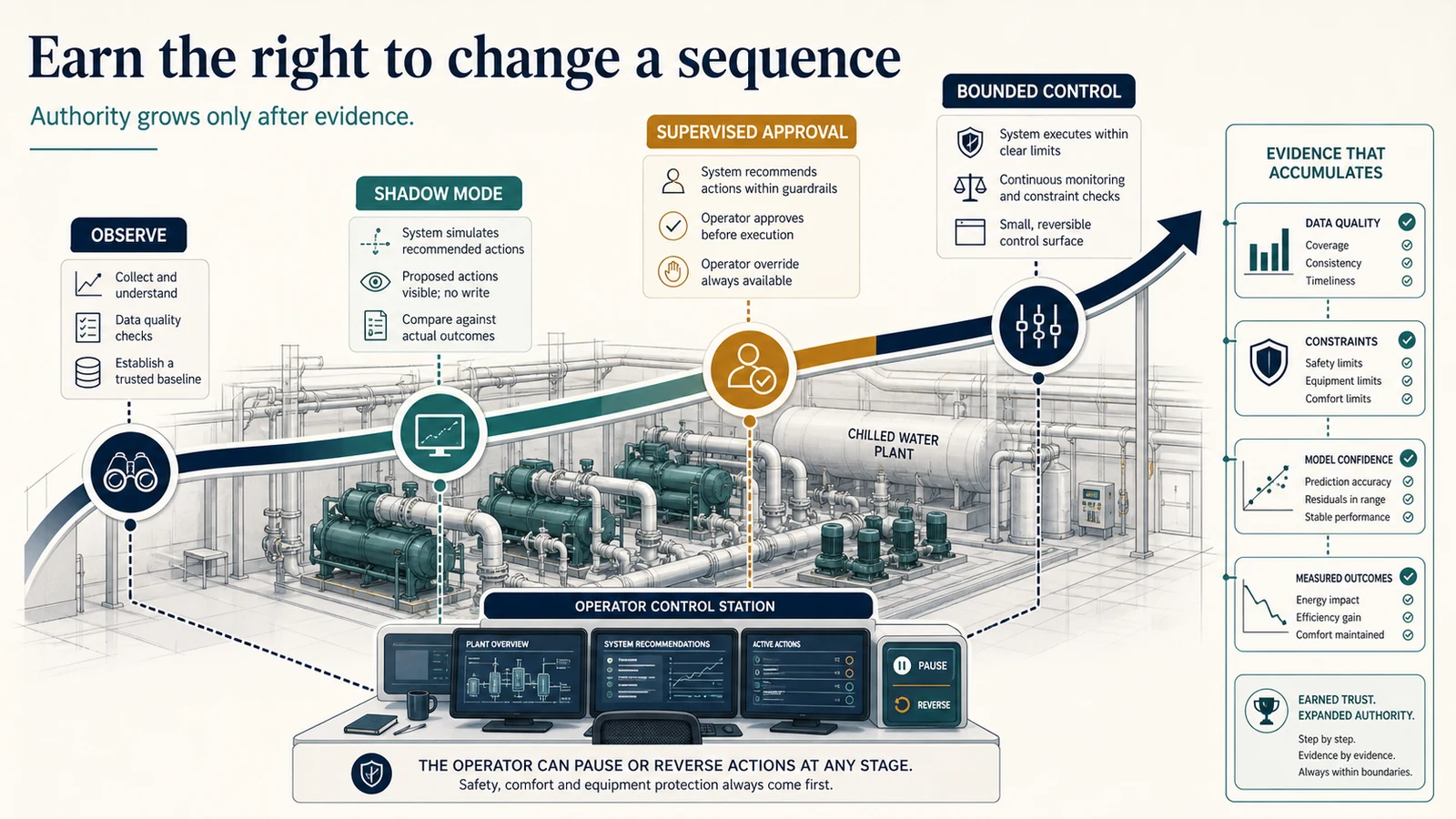
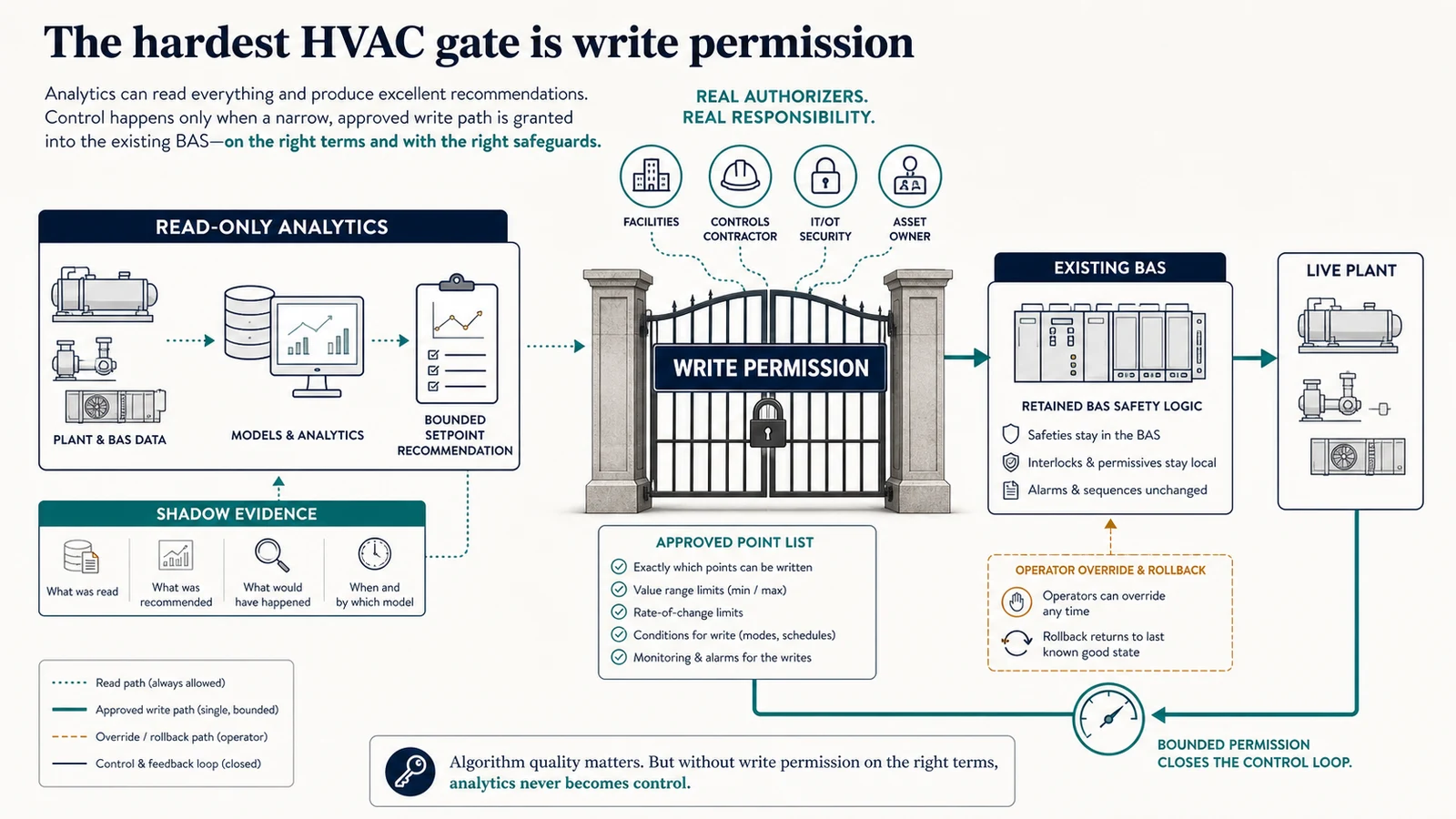
HVAC optimization stalls when a system can read the BAS but cannot write approved setpoints back. The control loop only closes after bounded write permission is earned inside an operator-approved envelope.
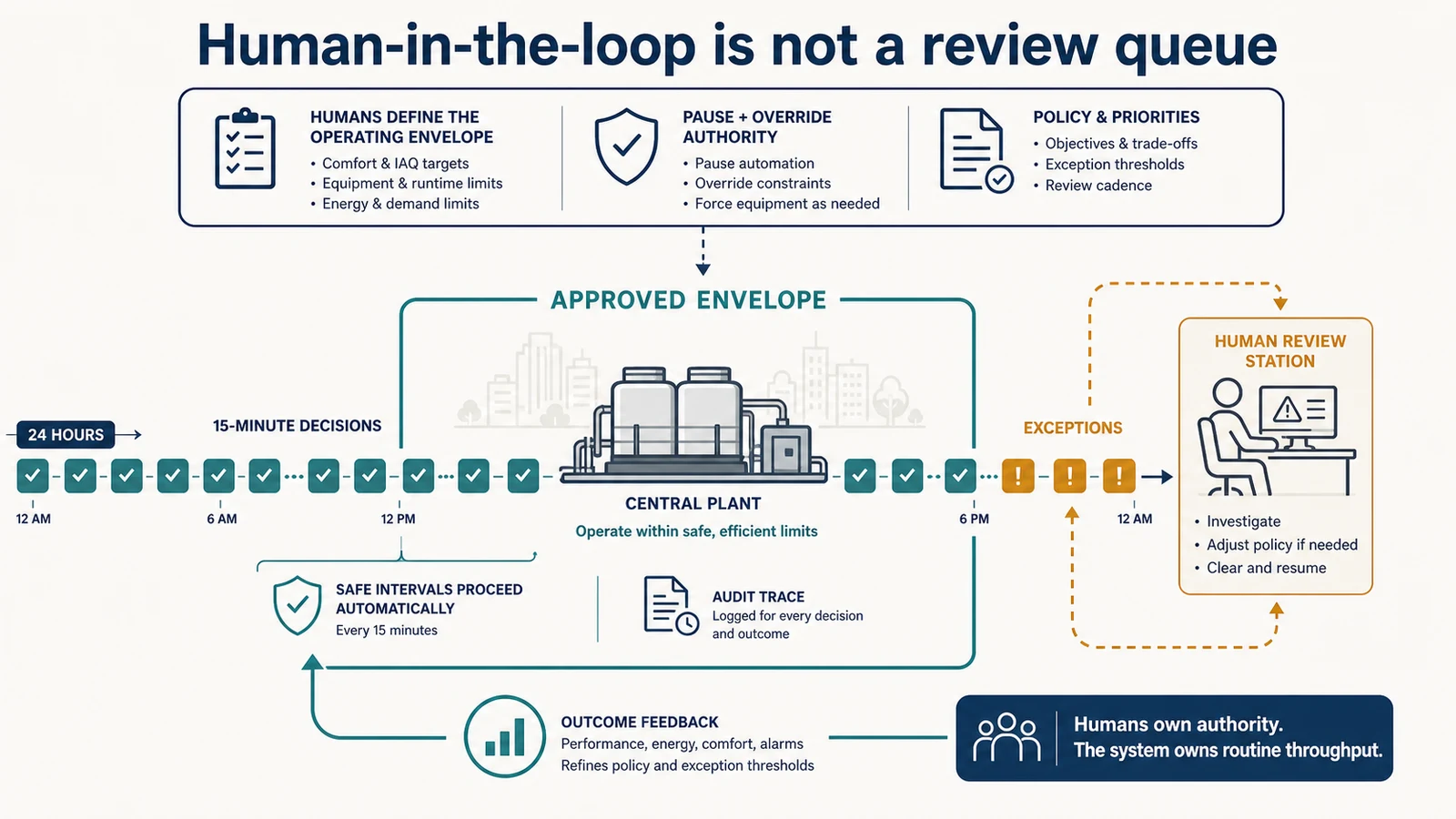
Human-in-the-loop HVAC AI needs accountability for 15-minute control decisions without turning facility teams into the review queue.
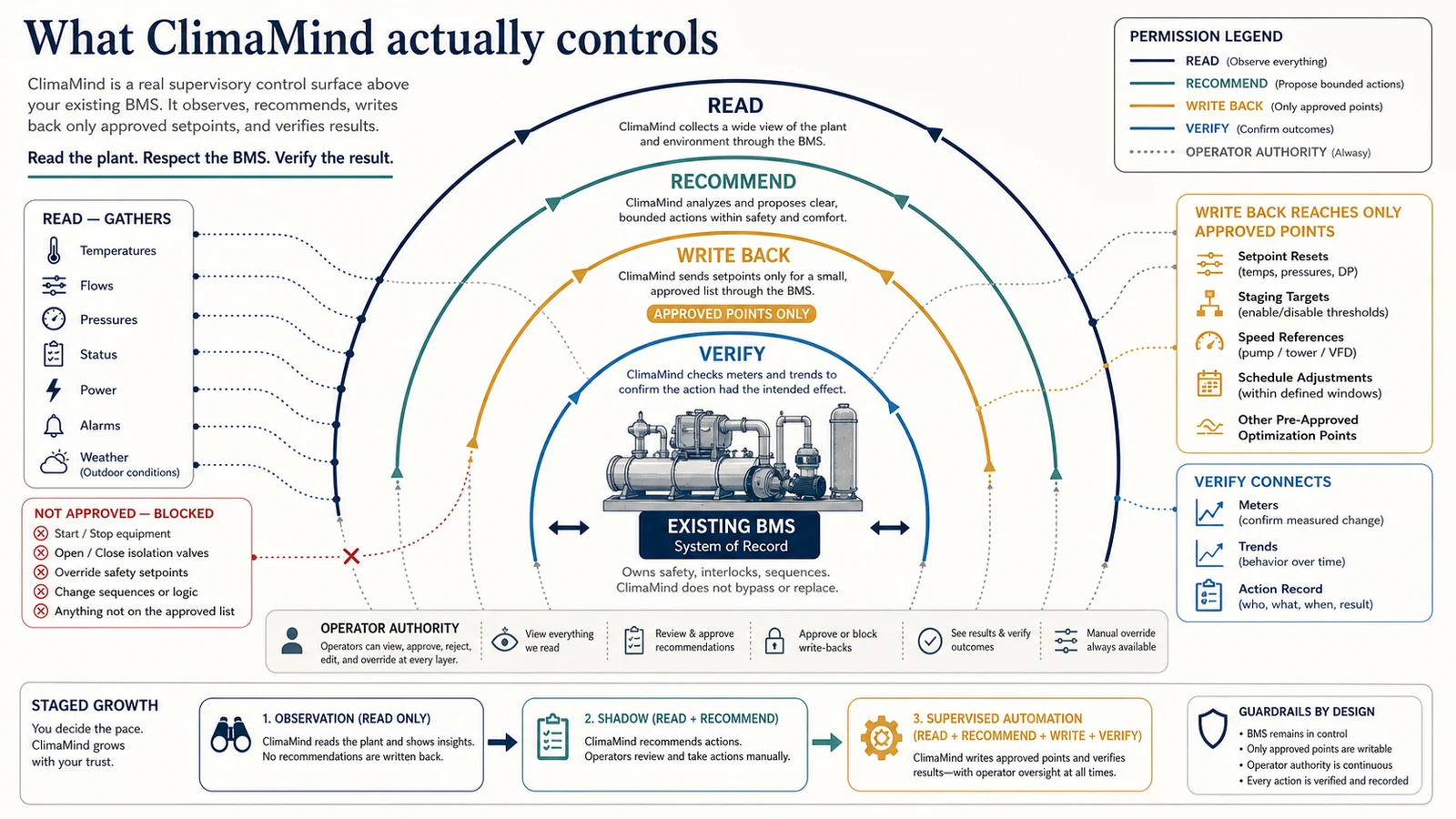
ClimaMind acts as a supervisory optimization layer above the existing BMS. It reads plant conditions, recommends bounded control actions, writes back only to approved points, and preserves the evidence needed to verify savings.
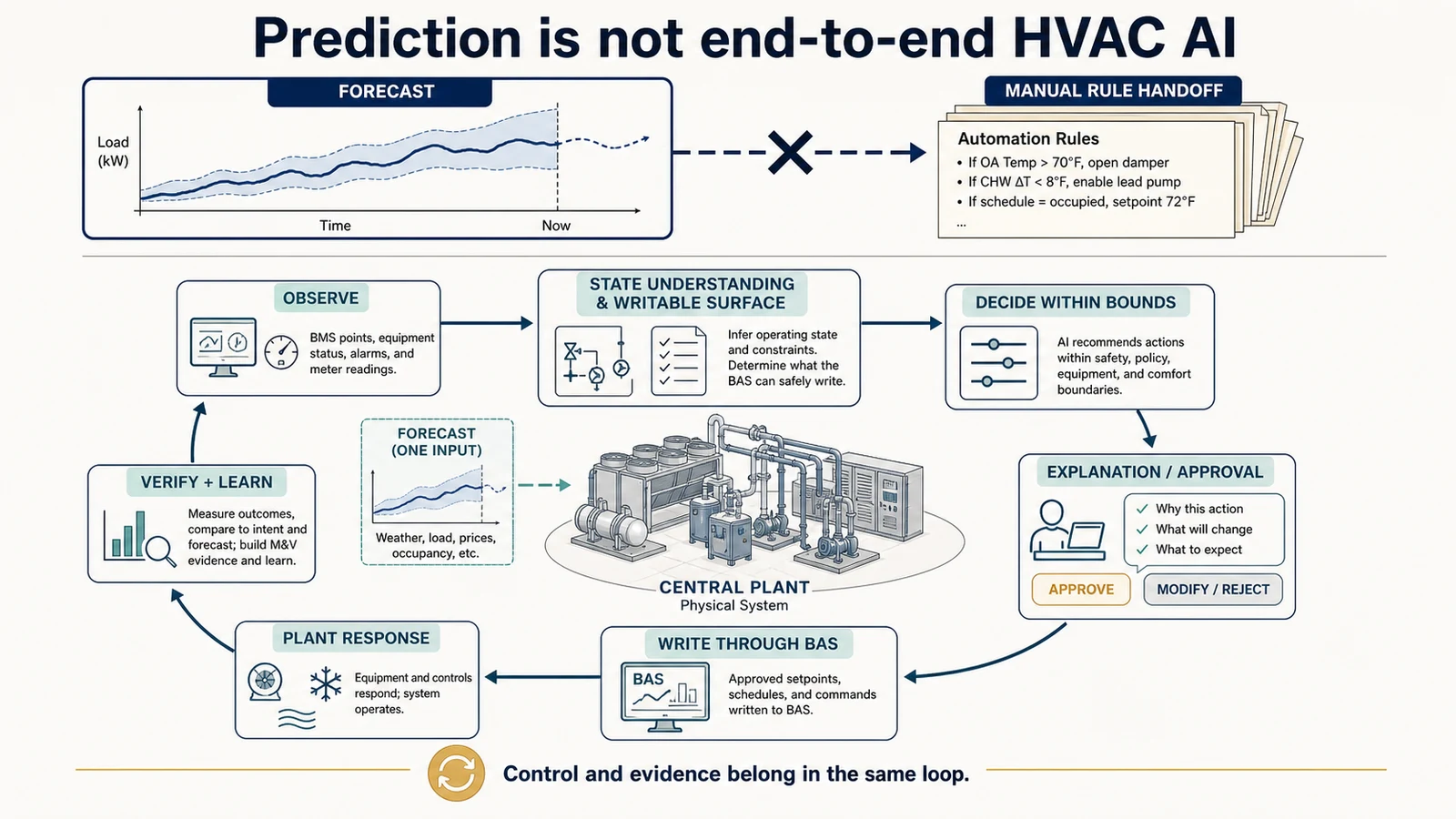
Forecasting building behavior is useful, but HVAC optimization is not end-to-end until AI stays in the loop from BMS data to control decisions, approved envelopes, write-back, operator review, and savings evidence.
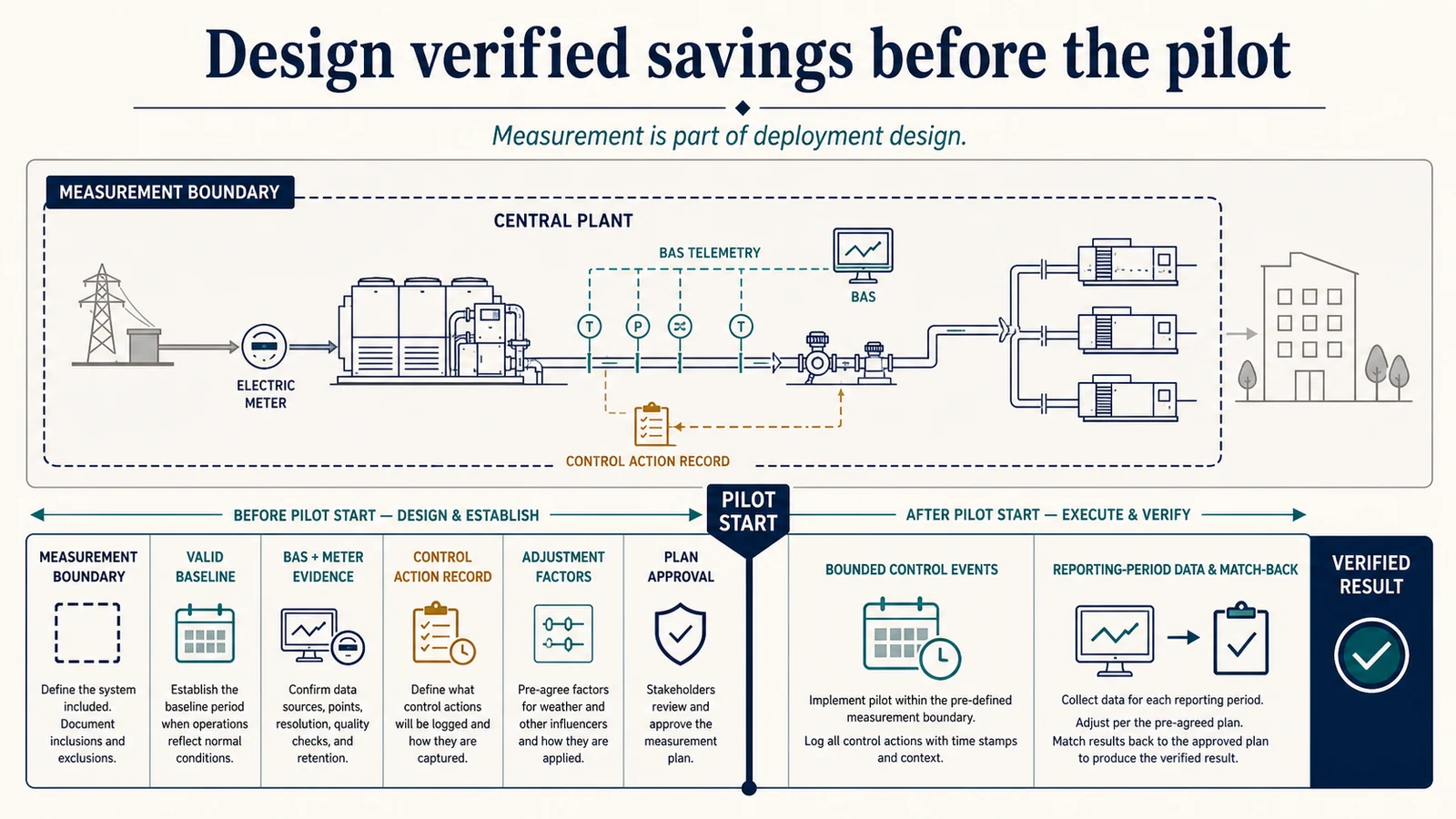
HVAC optimization pilots need a measurement path from day one: a clear boundary, valid baseline, BMS telemetry, meter evidence, and a way to connect control actions to savings.
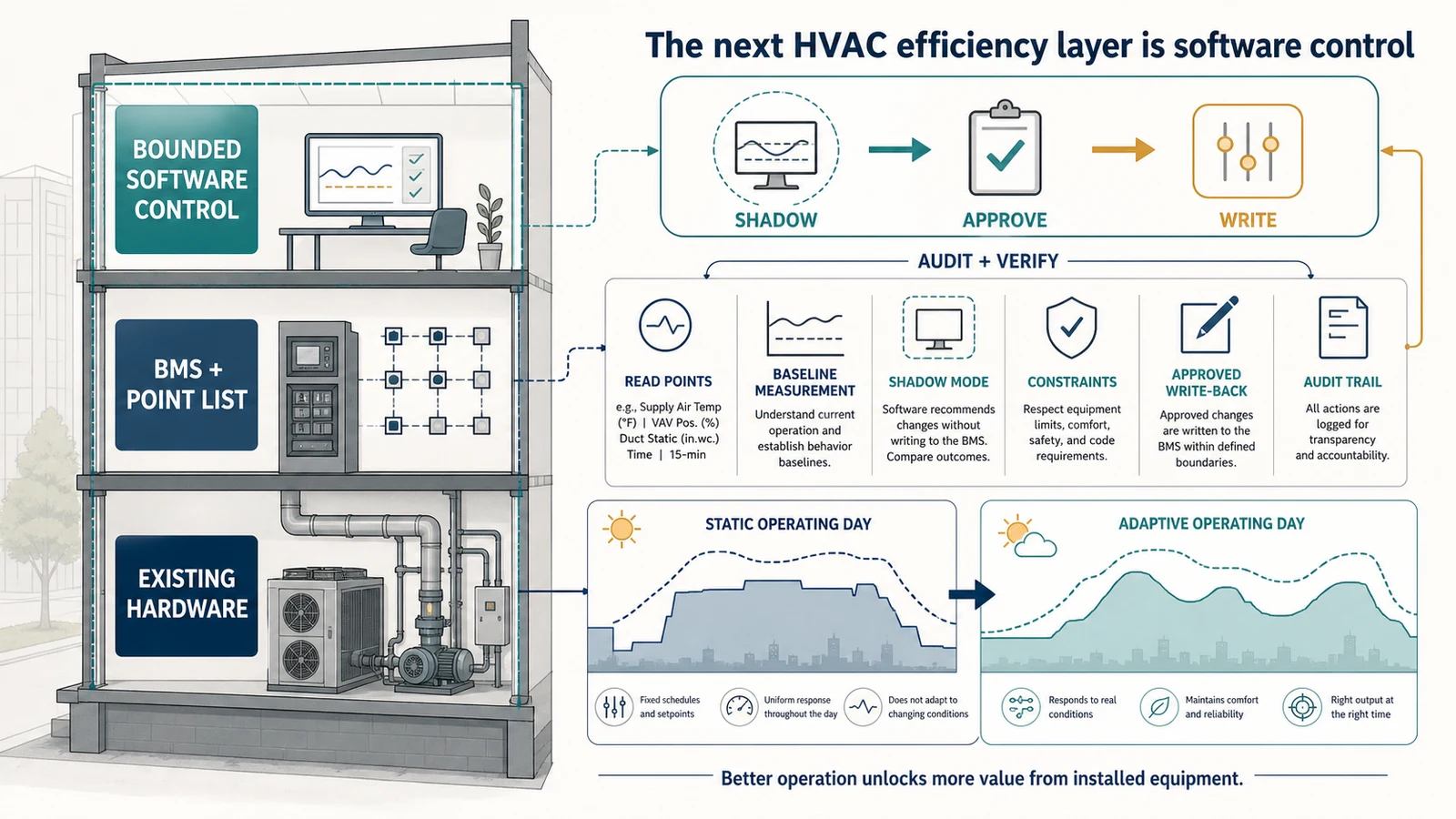
After the 2026 DOE Better Buildings and Better Plants Summit, the next HVAC efficiency opportunity is clearer: software control that safely operates existing building hardware through the BMS.
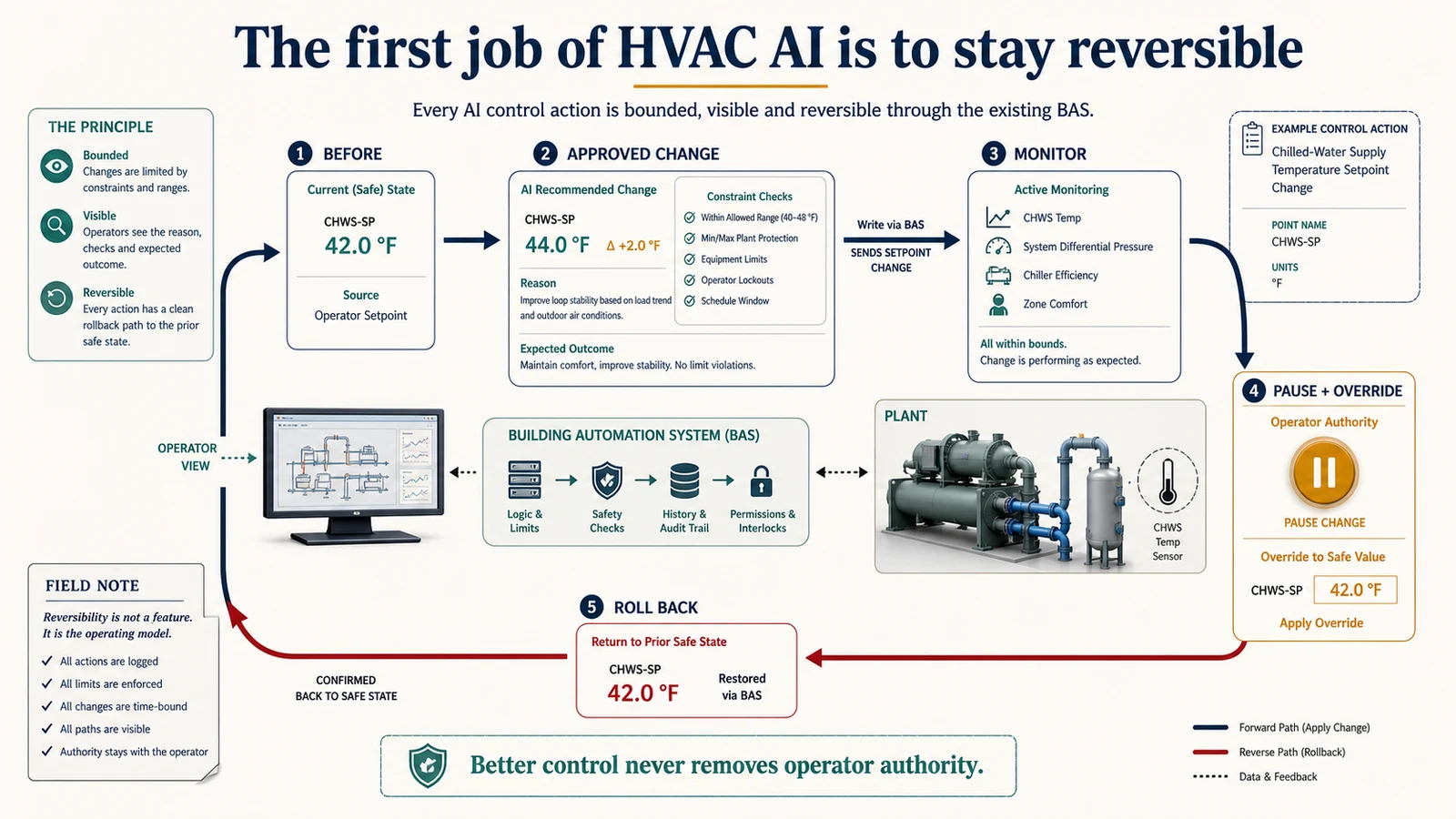
AI HVAC optimization earns control authority by keeping every action bounded, visible, reversible, and grounded in the existing BMS operating model.
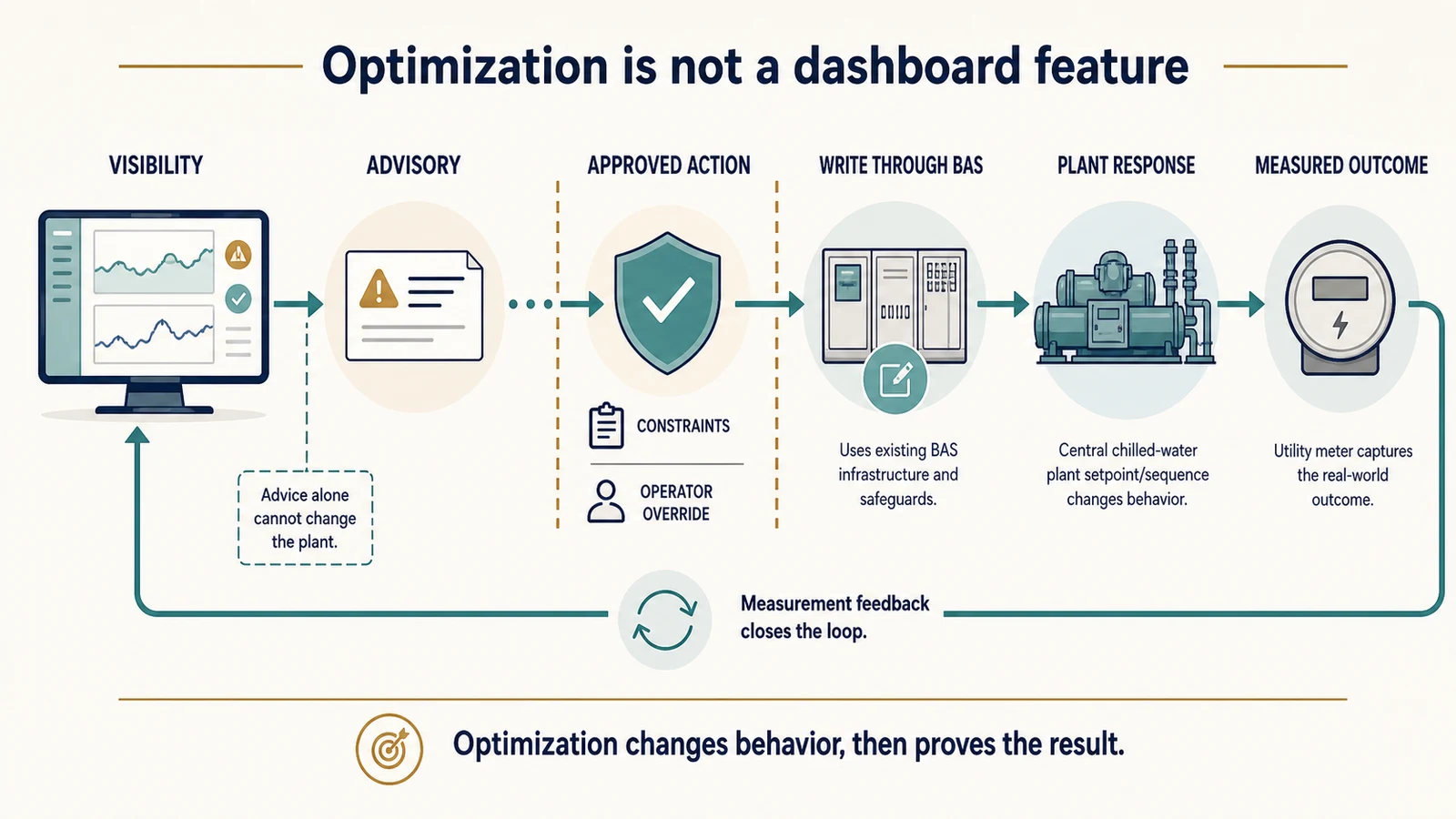
Dashboards can make HVAC inefficiency visible. Real optimization starts when software can safely change plant behavior through the existing BMS, inside an approved control envelope.
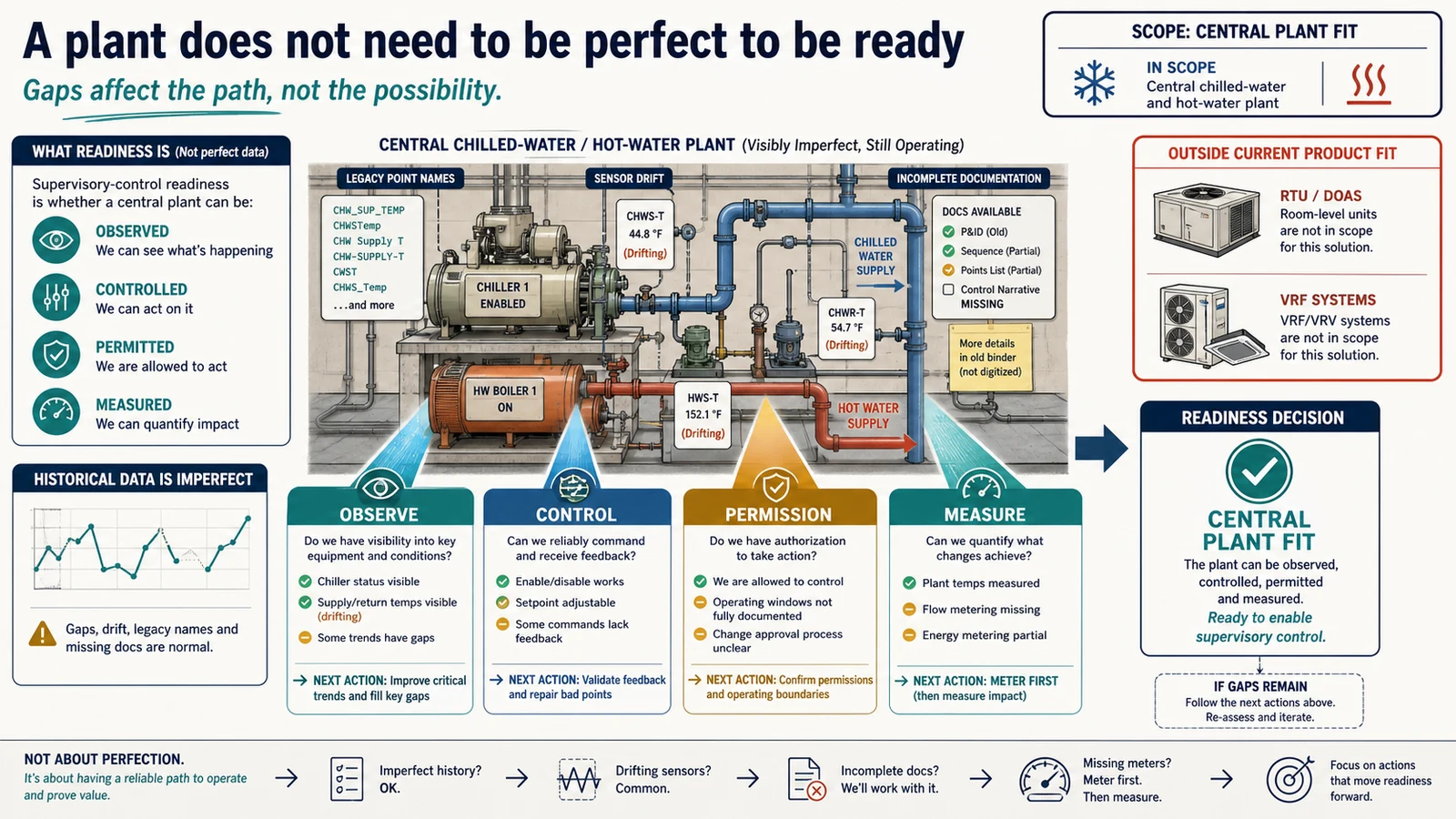
The readiness question for AI HVAC optimization is not whether historical data is perfect. It is whether the plant can be observed, controlled, permitted, and measured.
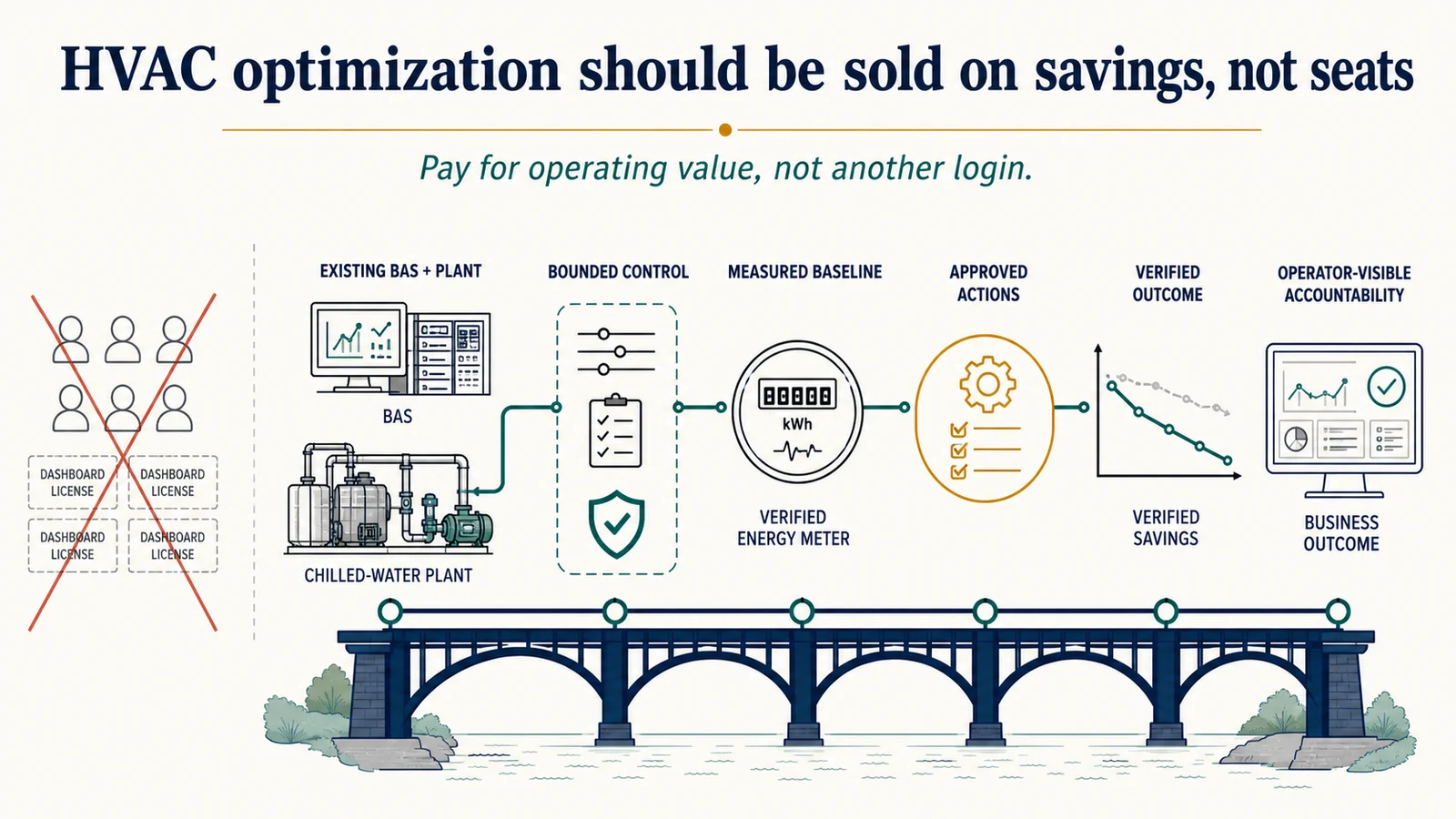
The outcome of HVAC optimization is not another dashboard. It is lower utility bills, a better-running plant, and accountability tied to measured performance.
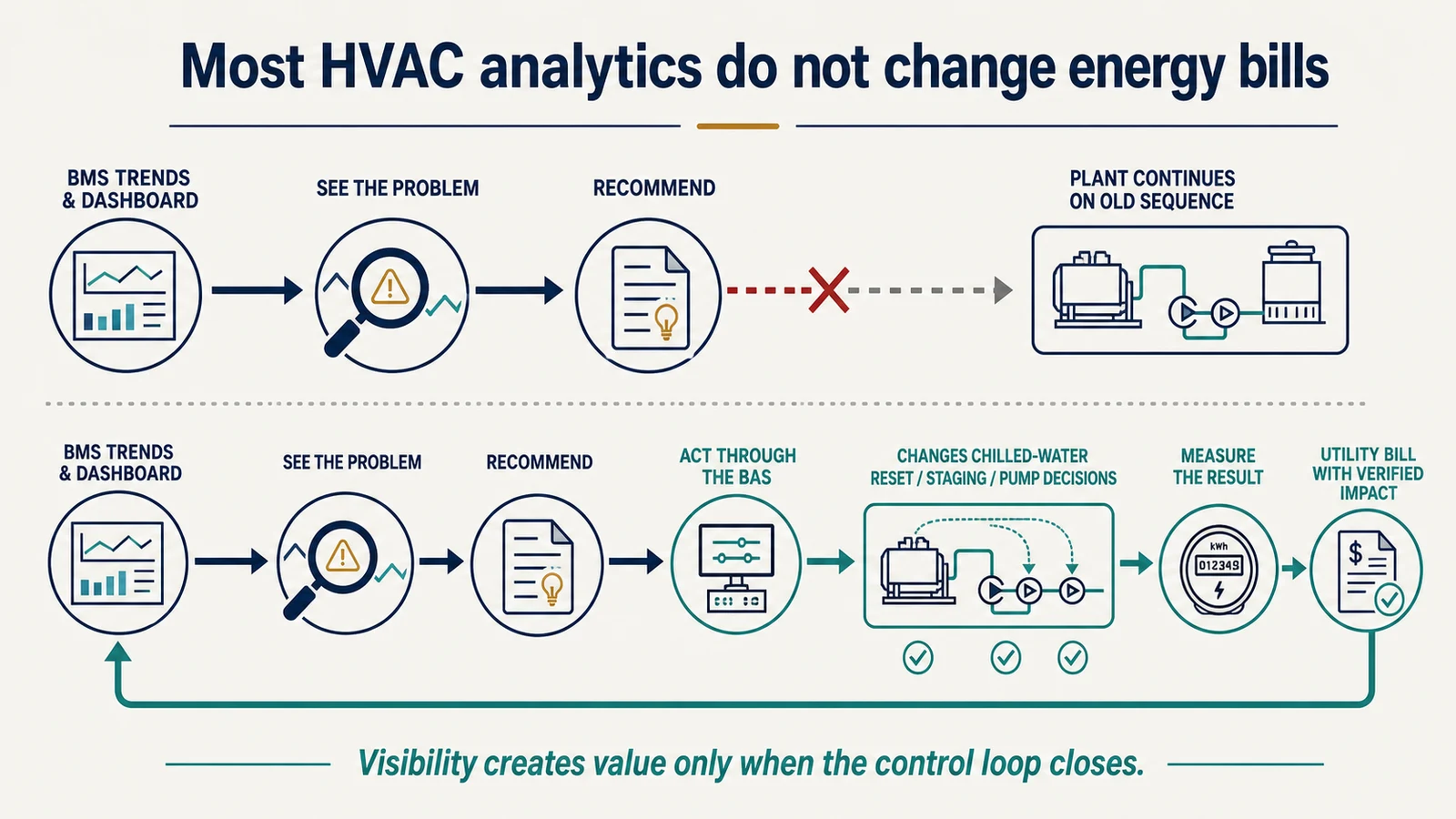
Visibility is useful, but energy bills move when recommendations become safe, accepted, operator-visible control actions.
In a real building, the first optimization question is not mathematical optimality. It is what the system is allowed to change safely.
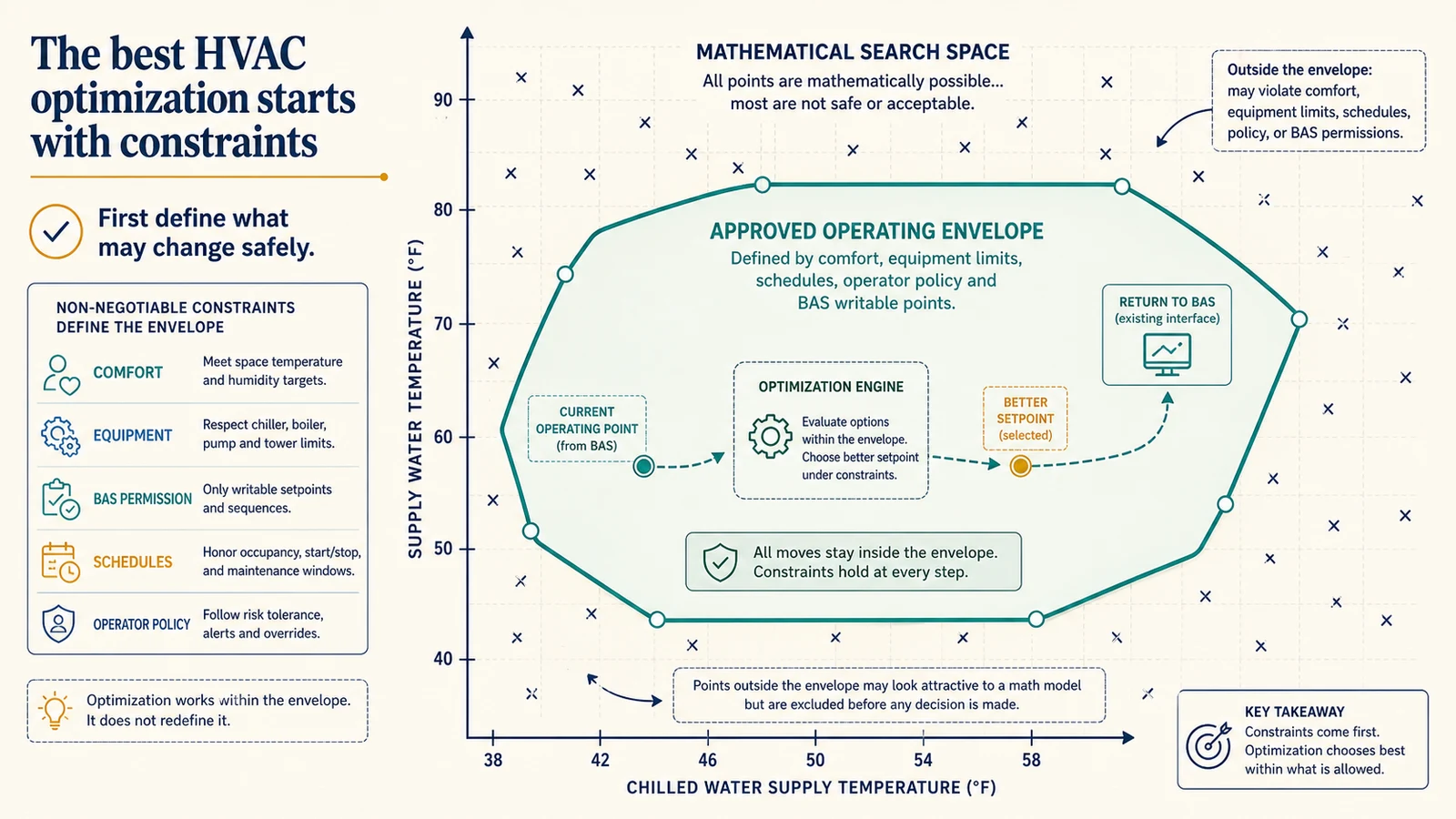
Facility teams are not rewarded for clever risks. AI HVAC optimization has to prove it understands the building before asking for control authority.