The hardest part of HVAC optimization is not finding a better sequence.
It is earning the right to change one.
Most facility teams are not rewarded for taking clever risks.
They are rewarded for keeping people comfortable, avoiding complaints, protecting equipment, and making sure Monday morning does not become an incident.
So when a new system says:
We can reduce energy use if you let us adjust the plant automatically.
The real question is what happens if the system is wrong
The real question is not only:
Is the algorithm good?
It is:
What happens if it is wrong?
That is why HVAC optimization is as much a trust problem as a technical problem.
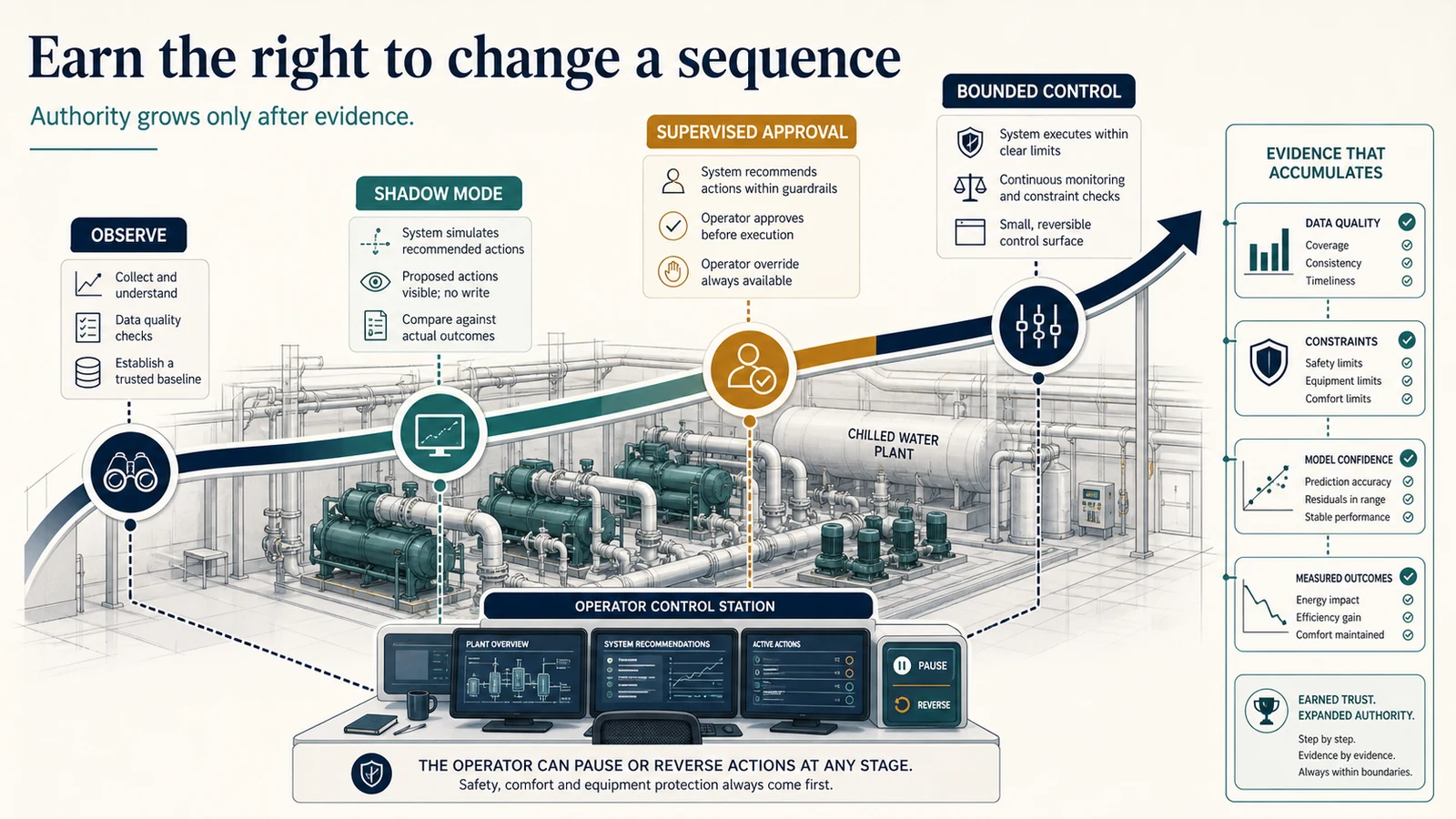
A deployment should earn control authority
A good deployment does not start by asking operators to hand over control. It starts by proving that the system understands the building.
- Show what the system would have done in shadow mode.
- Explain the constraint behind each recommendation.
- Keep comfort, safety, and equipment limits visible.
- Make every action reversible.
- Give operators clear override authority.
- Measure outcomes in terms the team already cares about.
The goal is not to replace the people running the building.
The goal is to give them a control layer they can trust enough to use.
Because in real buildings, energy savings do not come from the best theoretical strategy.
They come from strategies that operations teams are willing to run every day.