
AI HVAC Optimization
Get More From YourExisting Systems.
Energy Savings for C&I Buildings
AI HVAC optimization for offices, data centers, factories, and other commercial and industrial facilities that need measurable HVAC energy reduction without compromising comfort or operations.
Compatible with major BMS platforms
TridiumNiagara
Schneider ElectricEcoStruxure
Johnson ControlsMetasys
SiemensDesigo CC
HoneywellWEBs
Distech ControlsEC-Net
LynxspringJENEsys
Automated LogicWebCTRL
Carrieri-Vu
Delta ControlsenteliWEB
TraneTracer
ABB CylonASPECT
J2 InnovationsFIN
Up to 25%
Qualified HVAC Savings
Qualified sites can reduce HVAC energy use by up to 25%, with results measured against an agreed baseline and M&V method.
<3
Months Payback
All-in payback ranges from 0.3 to 10.6 months; the qualified standalone 75th percentile is under three months.
<1
Month Deployment
Typical deployment takes less than one month once BMS access is ready; some sites can start in days.
Supervisory Control, Not Just Analytics
ClimaMind is not a passive dashboard. It is a supervisory layer that recommends or writes bounded setpoints through approved field-controller paths, optimizing HVAC energy use while preserving operator workflows.
Plant Optimization Engine
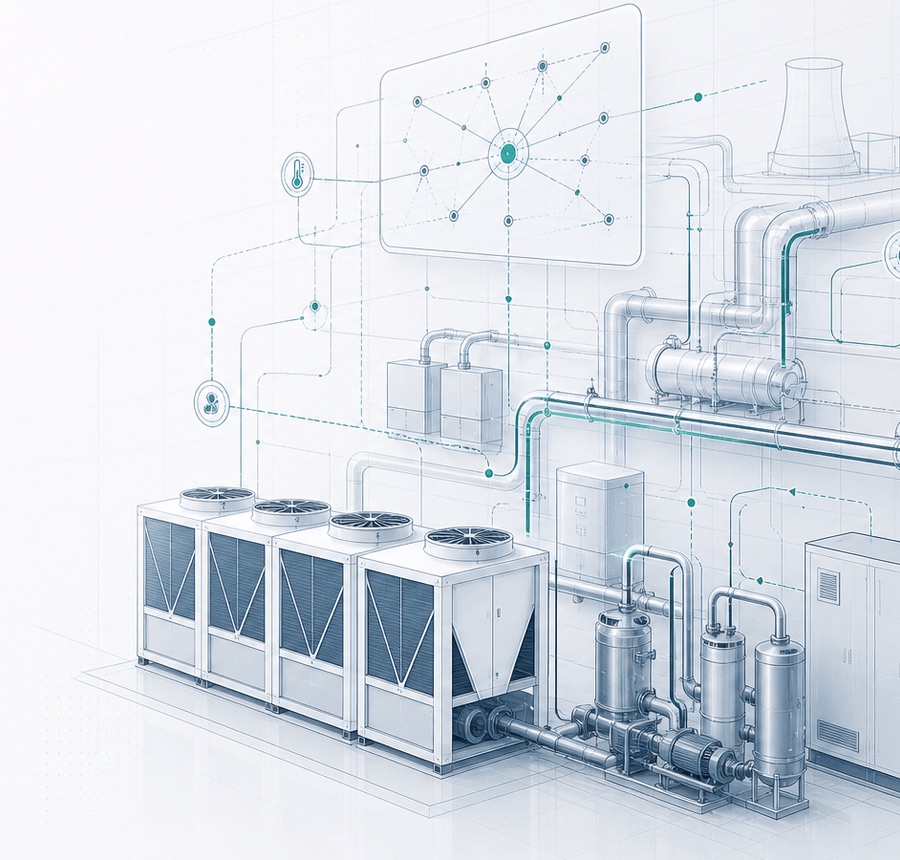
Our AI accounts for equipment wear, thermodynamic inertia, and thermal storage behavior to optimize chillers, pumps, towers, and airside systems as one plant.
Baseline Savings
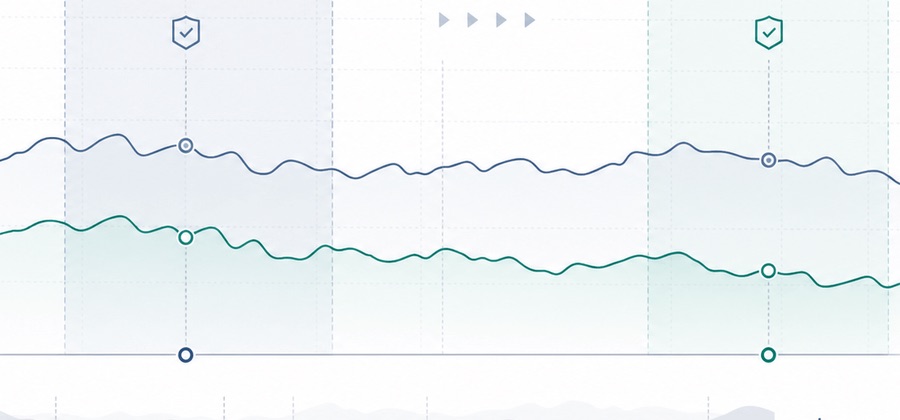
Savings are reviewed against comparable operating windows, BMS trends, and utility context, with action logs showing what changed and when.
Low-Disruption Integration
Uses approved BMS/BAS access paths and preserves incumbent controllers, graphics, and operator workflows while adding a supervisory control layer.
Low Implementation Cost
Typical projects are in the low tens of thousands because ClimaMind starts from available control access and a focused HVAC energy-savings scope.
IT/OT Best Practice
Aligns supervisory control with approved IT/OT access, logging, fallback, and change-control workflows.
Bounded Control Architecture
Write limits, advisory mode, OEM constraints, fallback behavior, and alarm-aware checks keep supervisory control inside approved boundaries.
Auditable Control Trace
Every suggested or written setpoint is paired with the reason, guardrail checks, equipment limits, operator overrides, and fallback state.
Review control model→PointStatus
CHW setpoint
Comfort OK
Current
44.0 F
→
Suggested
45.2 F
Tower fan
OEM limit
Current
68%
→
Suggested
72%
Solution Benefits
AI HVAC Optimization Benefits
ClimaMind focuses on accountable autonomy inside an operator-approved envelope: lower HVAC energy use, lower operating costs, better building efficiency, longer equipment life, more usable capacity, lower carbon footprint, and clearer compliance evidence.
01
Optimize HVAC Energy Use
Continuously improves heating, cooling, fan, pump, and plant operation so existing HVAC systems waste less energy.
02
Reduce Operating Costs
Cuts utility spend by turning BMS data into bounded supervisory control, not just energy reports.
03
Improve Building Efficiency
Coordinates chillers, pumps, towers, airside systems, weather, load, and comfort constraints as one optimization problem.
04
Lower Carbon Footprint
Reduces avoidable electricity, gas, steam, or district energy consumption tied to commercial building emissions.
05
Extend Equipment Life
Reduces inefficient cycling, simultaneous heating and cooling, and avoidable high-stress operation that can shorten HVAC equipment life.
06
Increase HVAC Capacity
Improves plant and airside efficiency so the same HVAC equipment can support more load before capital upgrades are needed.
07
Compliance and Reporting
Helps support LEED and ENERGY STAR certification workflows with auditable HVAC control logs, performance evidence, benchmarking data, and emissions reporting.
Deployment Readiness Assessment
Audit Your
Infrastructure's Potential.
Schedule a 30-minute technical briefing. We will assess BMS compatibility, control scope, and your 12-month energy dividend before any closed-loop rollout.

© 2025 NVIDIA, the NVIDIA logo, and NVIDIA Inception are trademarks and/or registered trademarks of NVIDIA Corporation in the U.S. and other countries.